When you look back at travel photos, the scenery is lovely but the person is often lost in the background. For four places, the Jeju sea, an evening city, Seoraksan autumn leaves and a winter snowfield, we go through clothing colors that don't clash with the background so you stand out, plus how to choose colors that cut down what you pack.
If you wear a brown coat in front of autumn leaves or a white puffer on a snowfield, the scenery comes out beautifully but the person stays blurry. Just picturing the color of your destination's background ahead of time changes which clothes you pick when you pack.
1. Picture the background color first
For a person to stay clear in a photo, the clothing color needs to differ from the background in lightness, or belong to a different color family. Either one alone is enough. Before you pack, look up a photo of where you're going and see which color takes up the most of the frame. Leave out clothes in the same color family and the same lightness as that color.
| Background | Colors taking the most space | Clothes that make you stand out | Clothes that tend to blend in |
|---|---|---|---|
| Sea | Blue, sky blue, sand beige | White, yellow, coral | Sky blue shirt, beige dress |
| Evening city | Dark gray, black, yellow lights | Light beige, ivory, camel | Black coat, charcoal jacket |
| Autumn leaves | Orange, red, brown | Navy, cream, light gray | Brown coat, camel knit |
| Snowfield | White, light gray | Black, burgundy, deep green | White puffer, light gray knit |
2. Jeju sea and beaches
On a beach with bright water like Hyeopjae or Hamdeok in Jeju, the sky and sea are both in the blue family, so light blue or light wash clothes look like one color with the background. A white shirt or white dress stays the cleanest against a blue backdrop, and warm colors like yellow or coral sit on the opposite side from blue, so they stand out even in a small area.
If you plan to sit on the sand for photos, look at your trouser color too. Beige trousers are close to the sand in lightness, so your legs look buried in the ground. White or dark wash trousers separate from the sand. On a day with strong sea wind, the hem of a long dress blows to one side, so if you want the shape of the clothes in the photo, it's better to shoot in the calmer morning.
In beach photos, look at hat color too. A wide-brim straw hat or a black hat casts shade over the face, so the expression comes out dark. A white or ivory hat bounces sunlight back toward the face, so there's less shade. Just tilting the brim up slightly at the moment of the shot brightens your face.
3. Evening city and alleys
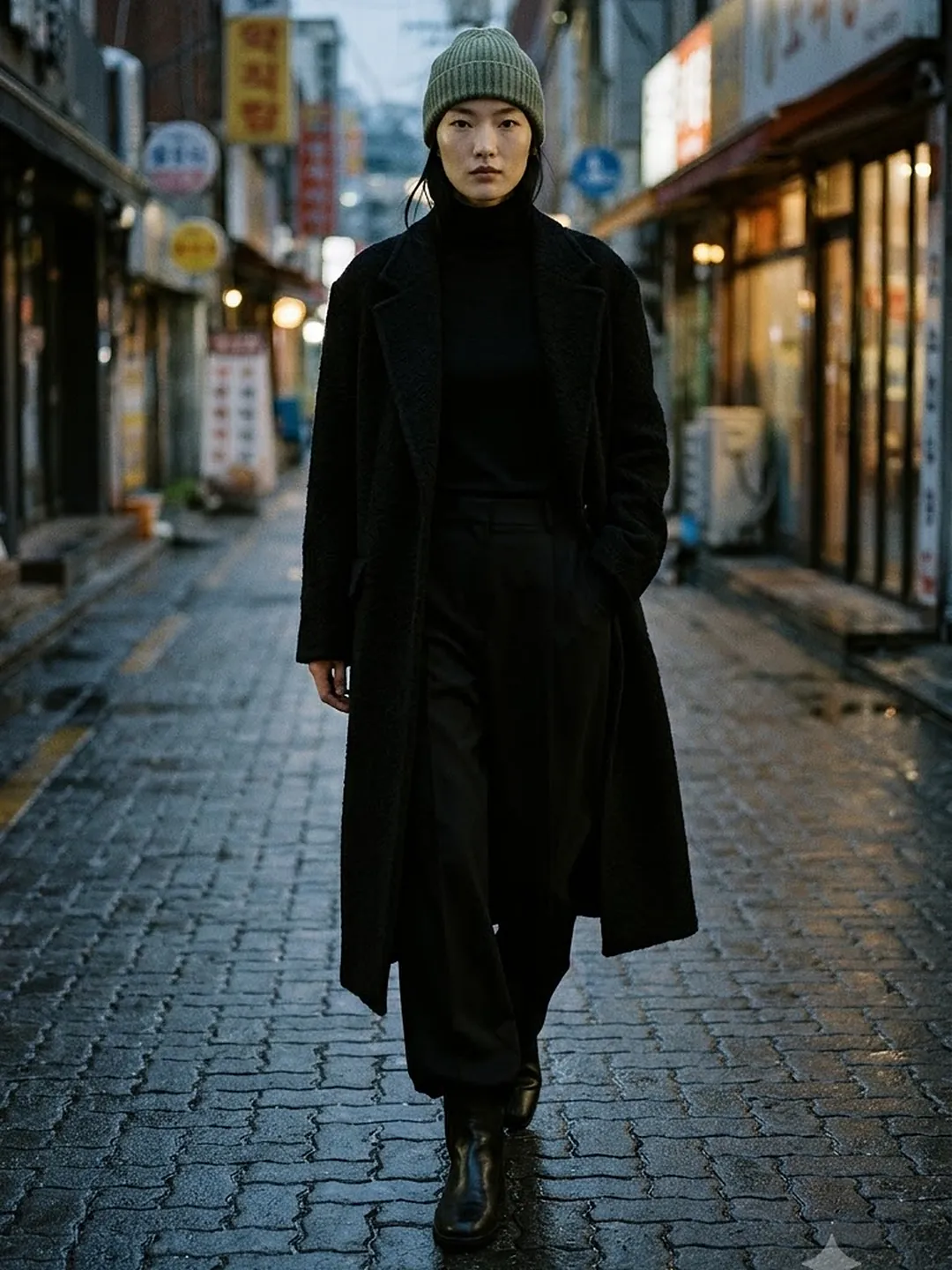
In city photos after sunset, most of the background is dark and only the signs and streetlights glow yellow. If you wear a black coat then, your body becomes as dark as the background and only your face seems to float. In a light beige trench, an ivory knit or a camel coat, your outline stays in front of the dark background.
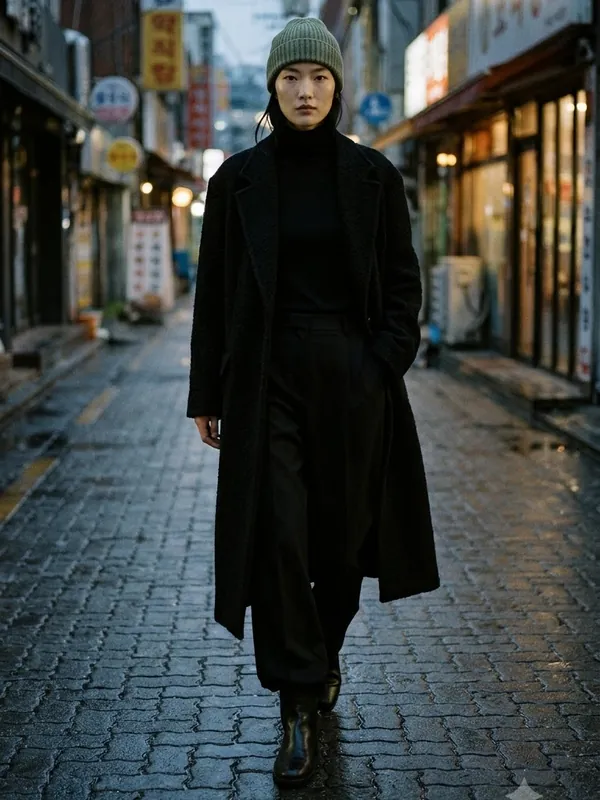
Under yellow streetlights or sign lighting, even white clothes can look yellow in a photo. How lighting and phone processing change clothing colors is covered separately in Why clothing colors look different in photos.
4. Seoraksan autumn leaves and fall mountains
By Korea Meteorological Administration observations, autumn color at Seoraksan peaks around October 17 in a typical year. It varies a little each year, so it's best to check the foliage status before you leave. Around that time the trails fill with orange, red and brown. In front of this background, a brown coat or camel knit blends into the leaf color. The color that keeps a person clearest in autumn leaf photos is navy. One cool color against a warm background also makes the leaf colors look deeper.
If navy feels heavy, a cream or light gray knit works too, since it separates from the background by lightness. On the other hand, a red knit disappears in front of red leaves, and on a yellow ginkgo path mustard clothes become the same color. Pick yellow when the background is red, and navy or burgundy when it's yellow, and they won't overlap.
5. Winter snowfields
If you wear a white puffer at snow-covered Daegwallyeong or a ski resort, the snowfield and the puffer overlap in color and your outline almost disappears. On snowfields, deep colors have the advantage. Black, burgundy, deep green and navy are the clearest against a white background.
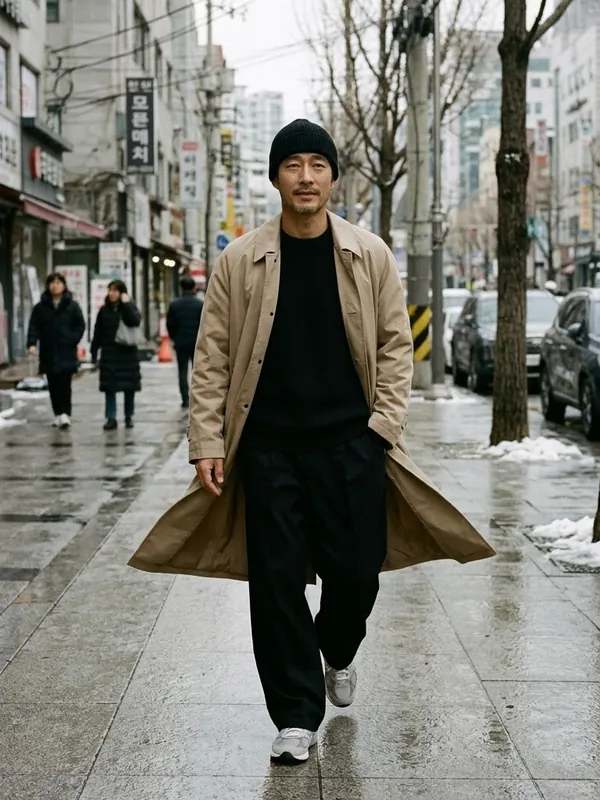
On days when snow reflects strong sunlight, faces tend to come out dark. Putting one bright color close to your face, like a scarf or beanie, keeps the area around your face from sinking.
6. Cloudy and rainy days
Travel weather isn't always clear. On a cloudy day the sky, sea and buildings all sink into gray, so gray or beige clothes become the same color as the background. On days like that, one saturated color such as mustard, coral or cobalt blue keeps the photo from looking dull. If a whole top feels like too much, you can bring it in through a scarf, hat or umbrella color.
In rainy day photos, the umbrella is captured wider than you'd expect. An opaque umbrella can block light from above and make your face come out dark, so at the moment of the shot, look for a spot where light comes from in front of your face. Bringing a clear umbrella reduces this worry.
7. Choosing colors to pack lighter
For a three- or four-day trip, two pairs of trousers and three or four tops are enough. Keep the trousers in colors that work anywhere, like dark wash and black, and change color only through tops and scarves, so the same trousers still give you a different photo each day. One pair of white sneakers and one pair of black flats suit most backgrounds. For example, a white shirt on beach days, a navy knit on autumn leaf trails, and a beige outer layer for evening alleys, swapped in turn.
If you're traveling with someone, match your clothing colors once before you leave. If both of you show up in black puffers, the two people in the photo become one color. Even if only one of you wears a light outer layer, the two of you stand apart in the photo you take together.