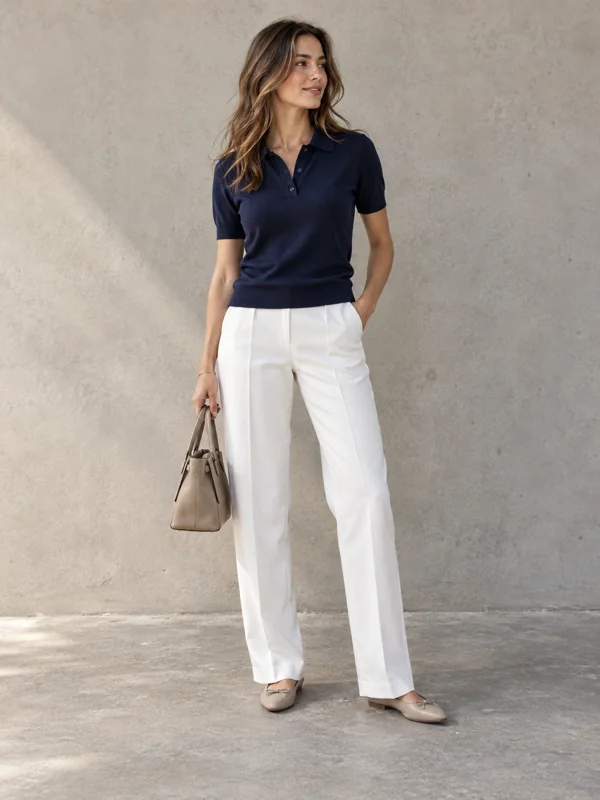
One table covers black, charcoal, gray, beige, navy, and dark wash pants, with the top colors that work and the ones that are tricky for each. Why a black top looks off with navy pants, when beige pants can look like bare legs, and how shoes can connect your legs.
Most mornings, the question in front of your closet starts with your pants. You own only a few pairs and rotate them often, so you pick today's pants first and then decide what goes on top. If you tend to set out your pants first, start with the table below.
1. Top colors by pants color
The left column is your pants. The middle column lists colors that rarely go wrong on top. The right column lists colors you can wear, but with conditions.
| Trousers | Tops that work | Tops with conditions |
|---|---|---|
| Black | White, ivory, gray, camel, blue | Black (in a different fabric), navy (only a clearly lighter navy) |
| Charcoal | White, light blue, lavender, beige | Gray (only with a clear difference in lightness) |
| Gray | Navy, black, burgundy, white | Gray (at least one step lighter or darker) |
| Beige | Navy, black, brown, white shirt | Ivory, light pink (add one deeper color near your face) |
| Navy | White, light blue, gray, beige, camel | Black (looks off in the same fabric) |
| Dark wash | White, gray, beige, khaki, burgundy | Denim shirt (only when the lightness is clearly different) |
Every row in the table includes white. With just one white shirt, your pants color matters less. On the other hand, nearly every combination in the right column is one where the pants and top are similar in lightness. Below are three stories about that.
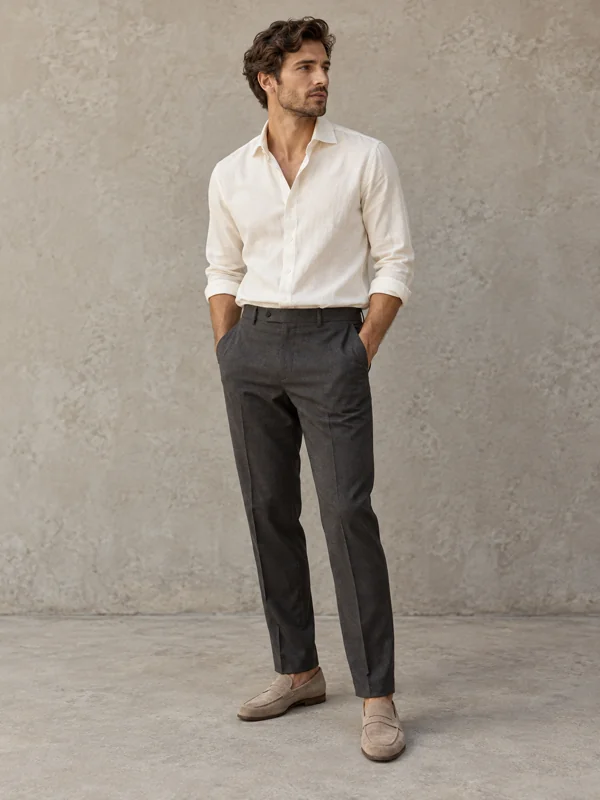
Before that, one note about black pants. The table lists a black top with black pants as conditional because of washing. Depending on the fabric and dye, black cotton or fleece-lined pants can fade the more you wash them, and next to a brand-new black knit that difference shows, making the pants look worn. On a day you want to wear all black, hold the top up against the pants in bright light to check that they haven't faded. If they have, switching the top to gray actually looks cleaner.
Burgundy or khaki pants, which aren't in the table, are colored pieces in themselves. On days you wear them, keep the top a calm color such as white, ivory, gray, or navy, and let the pants carry the only color. Stacking strong colors, like a mustard knit with burgundy pants, looks busy.
2. A black top with navy pants
In the dark, navy and black look like the same color, but in sunlight they look different. So if you wear a black knit with navy trousers, it's fine inside the office, but the moment you step outside for lunch, the top and bottom become subtly different pieces. It can easily look as if you grabbed the wrong suit pants on your way out.
If you want a dark top with navy pants, choose a gray lighter than charcoal, or match the top to the pants in navy. If you must wear a black top, pick a coarse-surfaced fabric like a knit. It looks different from the smooth surface of the trousers, so it feels less awkward.
3. When beige pants look like bare legs
Beige cotton pants or trousers are close to skin tone in lightness. Pair them with an ivory knit or a light pink blouse and both top and bottom end up close to your skin color, so in photos taken from a distance you can look bare rather than dressed. This is especially true in strong sun, like a spring picnic or an outdoor wedding.
The easiest way to wear beige pants is with a clearly dark top such as navy or black. If you want a light top, make one of the cardigan, jacket, or scarf a deep color, as in the pairing above.
4. A gray top with gray pants
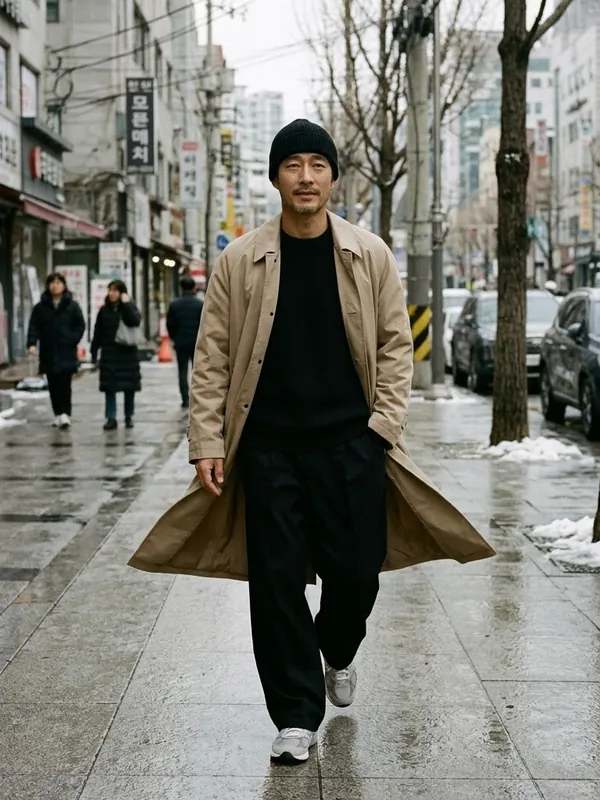
Wearing gray on gray can look polished. The problem is when the lightness is the same. A medium gray knit with medium gray trousers can look as if one piece of a gray suit was bought from a different company. Grays with the same name carry slightly different blue or yellow undertones, so when the lightness matches, that difference stands out instead.
So when you wear gray on gray, space the lightness clearly apart. A light gray knit with charcoal pants, or a charcoal knit with light gray pants. Similar lightness feels mismatched, while a wide gap like charcoal and light gray shows you took care.
5. What shows when you sit
Pants color shows more when you sit than when you stand. In a chair your thighs come forward and the area visible from the front gets bigger. Seen from across a meeting room or a restaurant table, light pants make your lower body look bigger than it is, and dark pants draw the eye up toward your upper body.
If your lower body is a concern, the basic rule is to keep the pants darker than the top. On days you want to wear white or light beige pants, match the top to the same lightness so top and bottom read as one line, and your lower body doesn't look bigger on its own.
6. Connecting your legs with shoes
When pants and shoes are connected in color, your legs read as one line. Black dress shoes with black pants, dark brown shoes with navy pants, brown loafers with beige pants: when the pants and shoes are similar in lightness, the line runs all the way down to your toes. On the other hand, bright white sneakers with dark wash pants break the line at the ankle but give a lively impression. Use one for workdays and the other for weekends.