Even the same jeans call for different tops and shoes depending on how faded they are. This guide covers what to wear on top for light, medium, dark wash and black denim, common weekend supermarket and cafe mistakes, matching brightness in a denim-on-denim outfit, bleeding from new dark wash, and the light band that appears when you cuff the hem.
Stand in the checkout line at a supermarket on a Saturday morning and you'll see plenty of people in jeans. Even with the same white tee and jeans, the impression differs quite a bit, and the difference usually comes from how dark the jeans are and whether the top fits that darkness.
1. Which kind are your jeans
Jeans fade first at the front of the thighs and the knees, so brightness varies a little even within one pair. The front of the thigh is what people see most, so sort by the color there.
- Light wash: a bright blue close to sky blue. Worn a lot in summer.
- Medium wash: the blue most people picture for jeans. If you could own only one pair, it's usually this.
- Dark wash: close to navy, so from a distance it looks like trousers.
- Black denim: denim dyed black or dark gray.
If you can't decide between two, spread the pants on white paper in daylight. If the blue stands out next to the paper first, treat them as medium wash; if they feel closer to navy or black, treat them as dark wash.
2. Light wash: one bright piece at most
Light wash is bright by itself, so if what you wear on top is bright too, the whole outfit washes out. One white T-shirt is fine, but if you go bright all the way with a white tee, an ivory cardigan and white sneakers, the outline of the clothes is hard to read in a photo taken from a distance. Keep one bright piece and make another darker. A navy cardigan, camel knit or black T-shirt all work.
The most common mistake with light wash is a pale sky blue shirt. When similar blues are also similar in brightness, top and bottom look like they faded together.
3. Medium wash: add punch with camel and brown
If medium wash looks flat with just a white tee or gray knit, try adding a brown tone like camel or brown. A warm brown beside a cool blue makes both colors clearer.
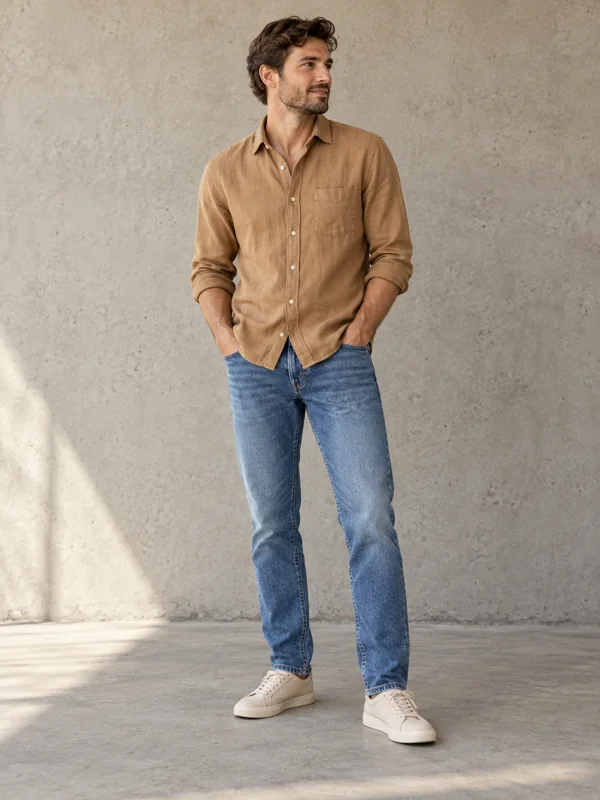
If you have no camel shirt, a brown knit or beige jacket does the same job. On the other hand, a gray hoodie over medium wash tends to look dull on a cloudy day since both are mid-brightness. If you want gray, choose a clearly dark one like charcoal, or a very light gray close to white, rather than a light gray.
If you'll sit in a weekend cafe for a long time, check the top's length too. Wearing a long shirt that covers the hips untucked means the jeans barely show when you sit, leaving only the top's color across a wide area.
4. Dark wash: jeans that work through a Friday at the office
Dark wash is close to navy, so with a jacket it's fine as casual-day office wear. A white shirt, gray knit and camel jacket all suit it, and it handles shoes up to brown loafers without strain.
Be careful with navy tops. Dark wash and navy are similar in brightness but differ in the character of the blue, so top and bottom look separate, like clothes bought on different days. If you do want navy, choose a coarse-textured material like a knit and show a white shirt collar inside to separate the two once.
New dark wash can bleed dye onto light things. Wearing a white bag snug at your waist or sitting a long time on a light sofa or car seat may leave blue stains. Check the care label first, wash it separately from light clothes at first, and carry light-colored bags by hand to be safe.
5. Black denim: don't wear it like black pants
Although the name has black in it, black denim looks a shade lighter and duller than black slacks because of denim's rough texture. It may also fade to a grayish tone as you wear and wash it. So if you think of it as black pants and put a new black knit on top, the pants look faded.
It's easier to choose black denim by thinking of it as dark gray pants. White, ivory, camel or light gray sweatshirts on top make a clear brightness difference with the pants. For shoes, suede or sneakers match the rough texture of the pants better than shiny black dress shoes.
If you want to keep black denim black longer, check the care label first, and if the pants are machine washable, turn them inside out, wash in cold water, and dry in the shade. Not every black denim turns gray, but this can help keep the color. If it's already turning grayish, accept it and place it next to a warm color like a camel coat or beige knit. Faded black denim is a cool gray, so it looks less worn next to warm colors.
6. Denim on denim and the hem
In a denim-on-denim outfit, wearing a denim shirt or jacket with jeans, brightness difference is everything. If you go two or more steps apart, like a light wash shirt with dark wash pants, the two pieces look separate; if you match the same darkness, like a medium wash jacket with medium wash pants, it looks like a one-piece work suit. Bright on top and dark on the bottom is generally more stable.
If you cuff the hem once, check the color of the folded part too. Jeans are usually woven from blue-dyed and undyed threads, so the inside is often lighter than the outside. So cuffing dark wash makes a light band at the ankle. This band looks light when connected to white sneakers, but stands out alone over black dress shoes. On dress shoe days, leave the hem down so it slightly covers the top of the shoe.