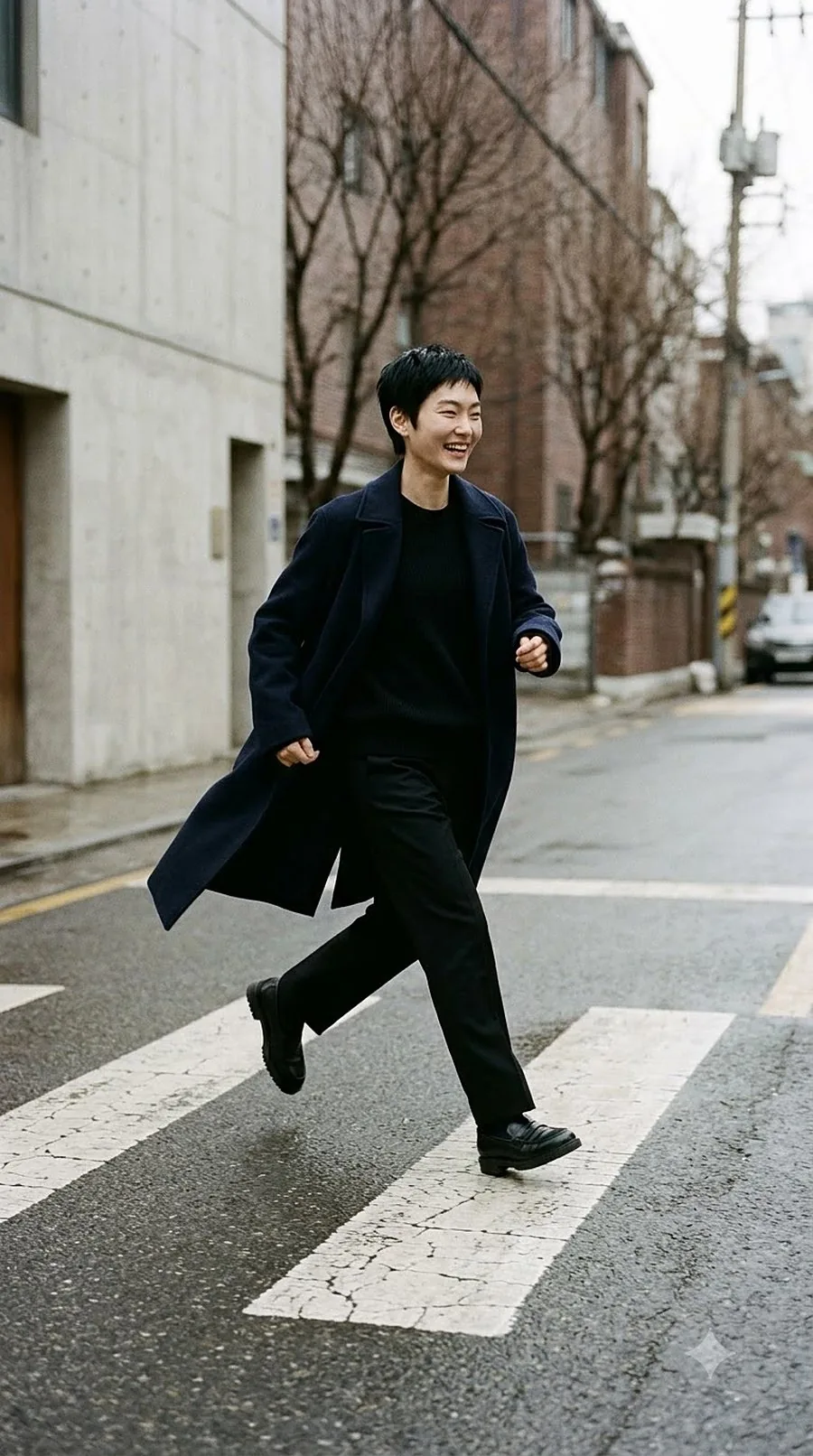
I wore a week in a few navy trousers, knits, and jackets: work, a presentation, a rainy day, a team dinner at a Korean barbecue restaurant, and a weekend outing. Here are the colors I put next to navy each day, what to watch for that day, and what to do when your navies don't quite match.
Even one or two navy pieces in your closet make the week easier. Navy is lighter than black and works from the office to a weekend outing. The worry is that wearing the same navy again and again makes every day look like the same outfit. So I wore a few navy pieces from Monday to Sunday and noted what I put next to them each day.
1. The navy I started with
I started with four navy pieces: navy trousers, a navy knit, a navy jacket, and a navy cardigan. The rest were common closet items: a white shirt, a light blue shirt, a gray knit, beige chinos, and white pants. The rules: include at least one navy piece each day, and never repeat the same combination.
2. Monday to Sunday
Monday: weekly meeting
A meeting at the start of the week, so I kept it easy. Navy trousers with a white shirt and a gray cardigan on top. Navy and gray are both cool colors, so it feels calm, and the white shirt brightens the area near your face. Even under meeting-room fluorescent lights, top and bottom don't sink.
Tuesday: presentation day
On a day of standing in front of people, I took out the navy jacket. Underneath, a light blue shirt instead of white. Layering the same blue family in different lightness looks neat yet less stiff than a white shirt. I kept gray trousers so the jacket and pants don't read as a matching suit.
Wednesday: rainy day
On rainy days I wore the navy trousers again, because mud splashes on the hem bother me on light pants. How visible wet marks are depends on the fabric and color, so it's easier on the mind to save favorite light pants for a clear day. On top I went bright with a white knit, and swapped suede shoes, which don't do well in water, for smooth leather ones. Office lighting feels dimmer than usual on rainy days, so a lighter top makes your face look less tired.
Thursday: team dinner at a Korean barbecue restaurant
The team dinner was at a Korean barbecue restaurant, so I chose the navy knit. Grease splatters show right away on a light knit, but a drop or two on navy is hard to see. Knits do pick up the smell of grilled meat, though, so I asked whether the restaurant had a bag or a separate place to hang my outerwear, and wore a shirt under the knit. I switched to beige chinos to space out the lightness of top and bottom.
Friday: casual day
It was a jeans day, so I put on a navy cardigan with dark wash jeans, then changed again before leaving the front door. The blues of top and bottom looked off from each other, so I switched to medium wash jeans and put a white tee under the cardigan, which looked much more natural.
Saturday: family outing
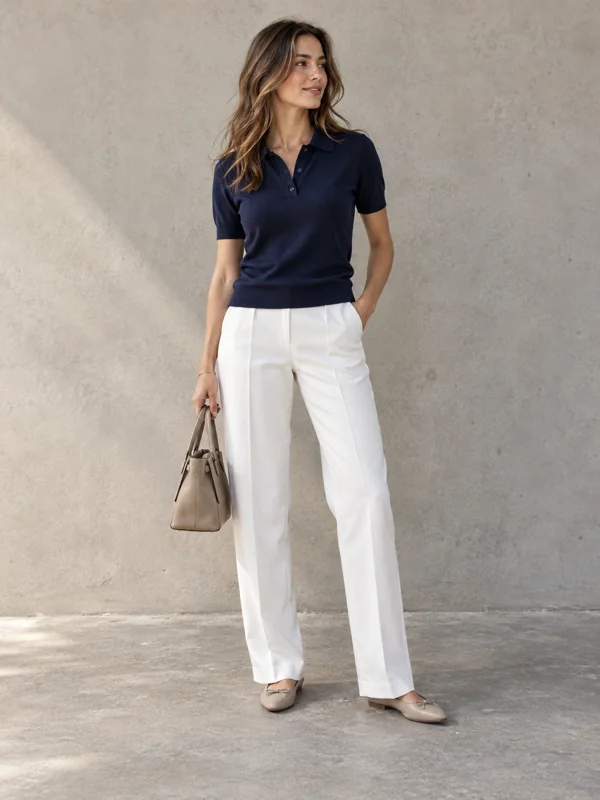
If you'll be sitting on the ground, as at a park outing, bring a picnic mat with white pants. Grass stains and dirt don't wash out easily. If you're worried, switch the pants to beige. There's still plenty of lightness gap from navy.
Sunday: family lunch
It was lunch at my parents' home, so I tucked a lavender blouse into navy wide-leg pants and put a gray cardigan over it. Lavender and navy are both cool-leaning colors, so they sit well together, and a pale lavender near your face looks soft at a daytime meal.
If you've worn navy all week, on the last day move navy down to the pants and wear a light-colored top. It's the same navy pants, but the mood is quite different from your weekday work look.
3. When your navies don't match
If you wore a navy jacket and navy pants together and something felt off, the two navies likely differ in shade. A purplish navy and a greenish navy, a navy close to black and a bright navy. They may look alike indoors, but the difference shows in sunlight.
The quickest fix is to change one of the two to another color. If you must wear them together, slip a layer of white shirt or gray knit between them to separate the two pieces. Making the fabrics very different also helps. When the textures differ, like a smooth wool jacket with coarse knit pants, the shade difference can look intentional. You can also split two navies of different shades across different days. Pair a purplish navy with gray, and a greenish navy with beige or camel, and each shade looks natural.
Storage matters a little too. If you leave a navy knit or jacket on a hanger by a window for long, only the sunlit shoulder may fade. If just one piece fades, the gap with your other navy pieces grows, so it's safer to hang your most-worn navy toward the back of the closet.
4. The week at a glance
| Day | Navy | Color next to it | What I watched for that day |
|---|---|---|---|
| Mon | Trousers | White, gray | Skin tone under meeting-room fluorescent light |
| Tue | Jacket | Light blue, gray | Keeping jacket and pants from reading as a suit |
| Wed | Trousers | White | Wet marks, suede shoes |
| Thu | Knit | Beige | Grease splatter, smell of grilled meat |
| Fri | Cardigan | Medium wash, white | Wearing it with dark wash jeans |
| Sat | Knit polo | White, beige | Grass stains on white pants |
| Sun | Trousers | Lavender, gray | Moving navy down to change the mood |
Over the week, the color I put next to navy most often was white, followed by gray and beige. If you're adding a new navy piece, first check whether your closet has a white shirt or white tee.